
RBI’s Proposed Cyber-Fraud Freeze Rules: What a ₹1,000 Debit Hold Could Mean for Bank Customers
RBI has proposed a time-bound process for banks to place temporary debit holds on suspected cyber-fraud transactions from ₹1,000. The draft aims to protect victims while avoiding unnecessary full-account freezes.
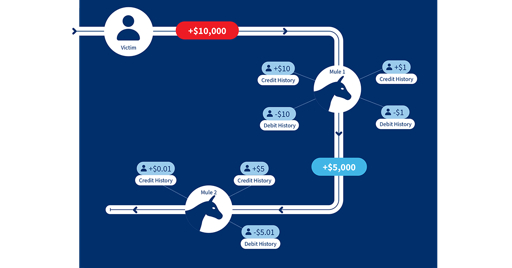
The Reserve Bank of India has proposed a new process for banks to handle suspected cyber-fraud and money-mule transactions. Under the draft framework, a bank may place a temporary debit hold on a suspicious transaction of ₹1,000 or more, instead of automatically freezing an entire account in every case.rbi
+1
The proposal is important for individuals, shopkeepers, freelancers, SMEs, online sellers and businesses that use UPI, IMPS, NEFT, RTGS and digital banking. It aims to help banks act quickly when money may be linked to fraud—while giving account holders a clear opportunity to explain legitimate transactions.rbi
+1
This is a draft proposal, not a rule currently in force. RBI has proposed that the directions take effect from April 1, 2027, although banks may choose to adopt the framework earlier. Public comments on the draft were open until October 2, 2026.newsonair.gov
+1
Quick answer: If your transaction is flagged under the proposed RBI process, the bank may temporarily stop debit access to the disputed amount and ask you for an explanation. You would have 20 calendar days to respond, while the bank would have 10 calendar days to review your documents.
What Has RBI Proposed?
RBI’s draft amendment to its Know Your Customer directions sets out a standard process for banks dealing with suspected money-mule accounts and transactions linked to cyber-enabled financial fraud. The proposal follows a Supreme Court order dated August 4, 2026, asking RBI to create and circulate a standard operating procedure for temporary debit holds related to money-mule activity and cyber fraud.rbi
+1
A bank’s transaction-monitoring system may identify a payment as suspicious when it appears to involve proceeds of cyber fraud or money-mule activity.
Examples of signals mentioned in reporting on the draft include transactions that are:
- Sudden or unusual for the customer
- Disproportionate to the customer’s declared profile
- Connected to a known cyber-fraud network
- Linked to a suspected money-mule account
- Identified by transaction-monitoring systems that may use AI or machine learningnewsonair.gov
- +1
The ₹1,000 threshold does not mean every transaction of ₹1,000 or more will be frozen. It means a transaction at or above that amount may be eligible for review if the bank identifies fraud-related risk signals.bfsi.economictimes.indiatimes
+1
What Is a Temporary Debit Hold?
A temporary debit hold means the bank restricts money from being withdrawn, transferred or otherwise debited while it reviews a suspicious transaction or account.
Depending on the circumstances, the proposed framework allows a bank to:
- Hold the suspected transaction amount, or
- Place a hold on the entire account when the account itself is suspected to be a money-mule account.bfsi.economictimes.indiatimes
- +1
This distinction matters.
For example, if an account receives a suspicious ₹25,000 credit but the broader account activity does not indicate money-mule behaviour, the proposed approach may focus on the disputed ₹25,000 rather than blocking all funds in the account.
However, if a bank suspects the entire account is being used to receive, layer or transfer proceeds of cyber fraud, broader debit restrictions may still apply.bfsi.economictimes.indiatimes
+1
What Is a Money Mule Account?
A money mule account is a bank account used—knowingly or unknowingly—to receive, transfer or move money connected with cyber-enabled financial fraud.
A person can become involved in money-mule activity when they:
- Allow someone else to use their bank account
- Rent, sell or share their account credentials
- Receive money for an online “job” and forward it elsewhere
- Accept a commission to transfer money through their account
- Share their UPI ID, ATM card, SIM card or internet-banking access
- Open an account for someone else’s use
- Participate in “easy money” or task-based payment schemes
- Receive funds from strangers and send them to another account
Do not assume money-mule activity only involves criminals who know exactly what they are doing. Some people are recruited through fake jobs, fake investment schemes, loan offers, romance scams, social-media messages or payment-commission offers.
Never receive and forward money for an unknown person in exchange for a commission. It can put your bank account and legal position at risk.
The Proposed Timeline Explained
The proposed framework creates a time-bound process.
Day 0: Bank identifies a suspected transaction
If a bank’s monitoring system detects a suspicious transaction of ₹1,000 or more, it may place an immediate temporary debit hold on the disputed amount. If the account is suspected to be a mule account, the hold may apply more broadly to the account.bfsi.economictimes.indiatimes
+1
The bank must notify the customer about the temporary hold and provide an opportunity to respond.
Days 1–20: Customer provides an explanation
The account holder would have 20 calendar days to explain the transaction and provide supporting documents.
Relevant documents may include:
- Invoice
- Purchase order
- Payment receipt
- Salary slip
- Contract
- Bank statement
- GST invoice
- Business registration proof
- Client communication
- Proof of source of funds
- Proof of payment purpose
- Identity documents, where required
The goal is to show that the transaction is legitimate and explain why it occurred.newsonair.gov
+1
Next 10 days: Bank reviews the evidence
The bank would have 10 calendar days to examine the explanation and supporting documents.
If the explanation is satisfactory, the bank must lift the hold immediately.newsonair.gov
+1
If concerns remain: Referral to police
If the customer does not respond within 20 days, or the explanation does not resolve the bank’s concerns, the bank must refer the matter to the jurisdictional police using the NCRP/CFCFRMS system. The bank should not keep the funds frozen indefinitely without following this process.newsonair.gov
+1
Law-enforcement response: 30 days
After referral, law enforcement would have 30 days to issue a formal statutory restraint order.
If no instruction is received during that period, the bank must lift the temporary hold on the 31st day after the referral, unless there is another valid instruction to continue it.bfsi.economictimes.indiatimes
+1
Maximum proposed duration: 60 days
Without a contrary instruction from law enforcement or another competent authority, the draft sets an overall maximum temporary debit-hold period of 60 days from the date the hold began.bfsi.economictimes.indiatimes
+2
Simple Example
Imagine that a small online seller receives ₹18,000 into their business account from a new customer.
The payment is unusual because:
- The customer is new.
- The amount is much larger than typical orders.
- The sender account has been reported in a cyber-fraud network.
- The seller quickly transfers the money to another account after receiving a “commission” request.
The bank’s fraud-monitoring system may flag the transaction.
Under the proposed approach:
textSuspicious ₹18,000 identified
→ Temporary debit hold placed on the disputed amount
→ Customer receives notice
→ Customer gets up to 20 calendar days to explain
→ Customer provides invoice, order details, dispatch proof and buyer communication
→ Bank reviews within 10 calendar days
→ If legitimate, the hold is lifted
If the seller cannot explain the payment, or evidence suggests the account is being used to move scam proceeds, the bank may refer the matter to law enforcement.
This is why businesses should maintain clean records for every significant payment.
How This May Affect Indian SMEs
For genuine SMEs, the proposed framework can be useful because it tries to avoid a blanket freeze of all funds when only a specific transaction is disputed.newsonair.gov
+1
However, it also means business owners should keep clear payment records.
Keep these documents ready
For important payments, keep:
- Customer invoice
- GST invoice, where applicable
- Purchase order
- Delivery challan
- Courier or dispatch proof
- Client agreement or work order
- Payment receipt
- Email or WhatsApp confirmation from the customer
- Bank-transfer reference
- Customer name and contact details
- Business registration records
- GSTIN and PAN details, where appropriate
Avoid suspicious payment behaviour
Do not:
- Accept money from strangers and forward it for a commission.
- Let someone use your bank account or UPI ID.
- Receive business payments into a personal account without records.
- Share ATM cards, PINs, OTPs, SIM cards or banking passwords.
- Process unknown transactions for online jobs, Telegram groups or “payment agents.”
- Send money onward because someone claims they sent it “by mistake.”
- Use someone else’s account to receive business revenue.
- Make unexplained large transfers that do not match your normal business activity.
Separate business and personal finances
Use a dedicated business account for business payments where possible. It makes it easier to explain the source and purpose of money.
Clear records can help you respond quickly if a bank asks about an unusual transaction.
What To Do If Your Bank Account Is Put on Hold
If you receive a notification that a transaction or account has been placed under a temporary debit hold:
1. Do not panic or ignore the message
Read the notification carefully. Confirm that it really came from your bank.
Do not click unknown links in SMS or email messages claiming that your account has been frozen. Call your bank using the number on the back of your debit card or the official bank website.
2. Contact the bank through an official channel
Ask:
- Which transaction has been flagged?
- What amount is under hold?
- Is the hold on a specific transaction or the full account?
- What documents are required?
- Where should documents be submitted?
- What is the deadline to respond?
- What is the complaint or reference number?
3. Submit clear supporting documents
Provide only the documents requested through the bank’s official process.
For a business transaction, submit a clear explanation with:
textTransaction date
Amount
Customer or vendor name
Business purpose
Invoice number
Purchase-order number
Supporting payment and delivery evidence
Keep copies of everything you send.
4. Do not use agents or “account unfreeze” services
Fraudsters may exploit account-freeze anxiety by offering to unfreeze your account for a fee.
Do not pay anyone claiming they can remove a bank hold through WhatsApp, Telegram, social media or a personal phone number.
Only your bank and legally authorised authorities can manage an official account hold.
5. Escalate through official channels
If your explanation is legitimate but you do not receive a response, use your bank’s official grievance-redressal system and keep a record of every complaint number, email and document submission.
If you are a business, involve your CA, accountant or legal adviser where appropriate.
What This Means for Cyber-Fraud Victims
For victims of online fraud, speed remains critical.
If money is sent to a suspected fraud account, banks and law-enforcement agencies need to act quickly to identify, hold and trace funds. A structured, time-bound debit-hold process may help reduce the chance that fraud proceeds are moved through multiple accounts before action is taken.rbi
+1
If you believe you have been scammed:
- Contact your bank immediately through its official helpline.
- Call India’s National Cyber Crime Helpline: 1930.
- File a complaint at:
texthttps://cybercrime.gov.in
- Save your UTR number, transaction details, beneficiary account, UPI ID, screenshots, messages, links and call records.
- Do not delay because fraudsters may transfer money onward quickly.
Why AI-Based Transaction Monitoring Matters
The draft proposal refers to banks using transaction-monitoring systems, including AI and machine learning, to identify payments that may be linked to cyber fraud or money-mule activity.newsonair.gov
+1
AI-based monitoring can help banks identify patterns that may be difficult to review manually at scale, such as:
- Sudden changes in transaction size
- Transfers inconsistent with a declared customer profile
- Rapid movement of funds between accounts
- Multiple accounts receiving related payments
- Links to previously reported fraud accounts
- Repeated small transfers followed by large withdrawals
- Unusual timing or recipient patterns
But AI should not be treated as a final verdict.
A flagged transaction is a signal for review—not proof that someone committed fraud. That is why the proposed process includes notice, an opportunity to explain, bank review and a defined law-enforcement pathway.
How ScamShield AI Helps Businesses Prepare
ScamShield AI helps Indian businesses detect fraud signals before risky transactions occur.
You can use ScamShield AI to review:
- Suspicious UPI payment requests
- Fake payment screenshots
- Unusual bank-transfer instructions
- New beneficiary account details
- Vendor bank-account change emails
- Fake invoices
- WhatsApp and email payment messages
- Government-notice scams
- Fake customer-care messages
- Scam links and QR codes
The best way to avoid a fraud-linked transaction is to stop it before money moves.
Verify the sender. Verify the payment request. Verify the beneficiary. Then pay.
Frequently Asked Questions
Has RBI introduced the new cyber-fraud debit-hold rule?
Not yet. RBI has issued a draft proposal to amend its KYC directions. The proposed effective date is April 1, 2027, although banks may choose to adopt the framework earlier.newsonair.gov
+1
Will banks freeze every transaction above ₹1,000?
No. The ₹1,000 figure is a proposed threshold for suspicious transactions. A transaction must also be flagged by the bank’s monitoring systems as potentially connected to cyber fraud or money-mule activity. It does not mean every transaction above ₹1,000 will be held.bfsi.economictimes.indiatimes
+1
Will RBI freeze my entire bank account?
Under the proposed framework, banks may place a temporary debit hold on the disputed transaction amount. A broader hold may apply if the entire account is suspected to be used as a money-mule account.bfsi.economictimes.indiatimes
+1
How long can a temporary debit hold last?
The draft gives customers 20 calendar days to explain the transaction, banks 10 calendar days to review, and law enforcement 30 days after referral to issue a restraint order. In the absence of a contrary instruction, the overall temporary hold would not normally continue beyond 60 days.bfsi.economictimes.indiatimes
+1
What is a money mule account?
A money mule account is an account used, knowingly or unknowingly, to receive, transfer or move proceeds of cyber-enabled financial fraud for another person.
What documents can help prove that a transaction is legitimate?
Depending on the transaction, useful documents may include invoices, contracts, purchase orders, delivery proof, salary records, GST documents, bank statements, payment receipts and client or vendor communication.
What should I do if I receive a message claiming my account is frozen?
Do not click links or call numbers included in an unexpected message. Contact your bank through its official app, official website or the number printed on your debit card. Fraudsters may send fake account-freeze messages to steal banking credentials.
What should I do if I lose money to cyber fraud?
Immediately contact your bank, call 1930, and file a complaint at cybercrime.gov.in. Preserve transaction references, UPI IDs, beneficiary details, screenshots and messages.
Final Takeaway
RBI’s proposal is designed to make cyber-fraud response more targeted and time-bound.
For genuine customers, the key message is not to fear every transaction above ₹1,000. The proposal does not mean every such transaction will be frozen.
Instead, it means banks may be able to act when a transaction is genuinely suspicious, while customers get a defined chance to prove that legitimate money is legitimate.
For SMEs and online sellers, the best preparation is simple:
- Keep invoices and payment records.
- Separate personal and business money.
- Avoid receiving and forwarding money for strangers.
- Verify unusual payment instructions.
- Report fraud immediately.
A clean transaction trail is not only good accounting. It is also one of the strongest protections against cyber-fraud confusion.